
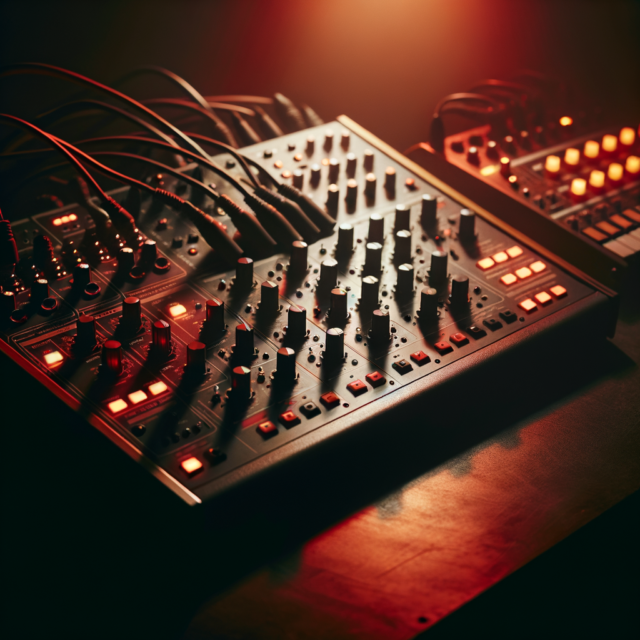
Every underground lineup in NYC looks the same: eight DJs playing CDJs for an hour each. The programming blurs together. Audiences cannot distinguish one event from another based on the lineup format alone. Hardware live sets break that pattern and give your event a reason to exist beyond the names on the flyer.
What hardware live sets actually offer
A hardware live performer brings drum machines, synthesizers, and sequencers to create music in real time on stage. The difference from DJing is fundamental: a DJ selects and blends pre-recorded tracks. A live performer generates the music from scratch during the set. The audience can see the creation happening — hands on machines, patches being tweaked, sequences being built in real time.
This visual element is the differentiator. In a dark room where most attendees cannot see the DJ booth, a hardware performer with illuminated machines creates a focal point. The performance becomes a spectacle, not just a soundtrack.
Programming placement
Hardware live sets work best in specific slots. The peak hours of a 12-hour event are the wrong placement — the crowd wants to dance to familiar energy during peak, and live improvisation introduces unpredictability that can break the flow. The right slots are the transitions: the build-up before peak (10pm-midnight) or the afterhours wind-down (4am-6am).
In multi-room setups, dedicate the second or third room to live performance. This gives the hardware artists the space and attention they need without competing with the main dancefloor energy. The side room becomes the experimental showcase — attendees who want to experience something different from the standard DJ set migrate there by choice.
The booking conversation
Hardware performers have different technical requirements than DJs. They need table space for equipment, multiple power outlets, potentially a sub-mixer, and sound-check time that CDJ DJs do not require. Factor setup and breakdown time into the schedule — a hardware performer cannot plug in and play in 60 seconds the way a DJ switches USB sticks.
Compensation follows the same structure as DJ bookings: $100 per hour for locals, commission on ticket sales through a personal promo link, guest list spots, and drink tickets. The commission model works particularly well for hardware acts because their niche audience is highly engaged and more likely to purchase through a personal link than a generic event link.
Genre flexibility within the dark constraint
Hardware live sets expand the genre range of your programming without breaking brand identity. A live modular synth performance can deliver ambient, industrial, acid, trance, or experimental textures that DJs playing pre-recorded tracks cannot replicate. The dark constraint — music that causes contemplation or catharsis — applies to the mood, not the format. A live hardware set that creates dark atmosphere fits the brand regardless of BPM or genre classification.
We used jam sessions as a testing ground for live performance. Private invite-only sessions for producers, live performers, and DJs with a bring-your-own-equipment format. These sessions surface talent who would never respond to a standard DJ booking call because they do not identify as DJs. They are producers who happen to perform their music live.
Marketing the difference
When marketing an event with hardware live acts, the format itself becomes the selling point. Instead of listing eight DJ names that the audience may or may not recognize, you are selling a format: live hardware performance alongside DJ sets. The format differentiates the event in a crowded calendar where every flyer lists the same genre tags.
Content from hardware performances is also more compelling than DJ set footage. Video of someone tweaking knobs on a modular synthesizer with waveforms visible on an oscilloscope screen captures attention in a way that another shot of CDJ platters does not. The 10-second cold ad featuring a hardware performance stops the scroll because it looks different from every other nightlife ad in the feed.
Hardware live sets are an underused programming tool in the underground scene. They differentiate your lineup, attract a niche audience that overlaps with but is distinct from the DJ-only crowd, and create visual content that outperforms standard event footage. The promoter who builds hardware performance into their regular programming has a structural advantage over the one running eight-DJ lineups every weekend.