
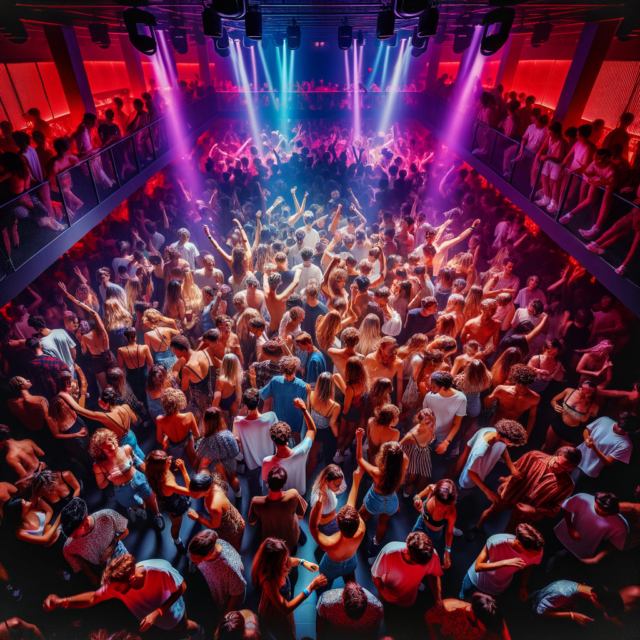
Nobody in the underground scene wants to talk about gender ratio on the dancefloor. It sounds like nightclub marketing from the 2000s. But the dynamics are real, the economic implications are measurable, and ignoring them costs you money and atmosphere every single event.
Why ratio matters for bar revenue
For non-queer scenes, a balanced gender ratio directly correlates with higher drink sales. This is not speculation — it is observable across dozens of events. When the room skews heavily male, bar revenue drops. When the demographics balance out, people spend more time at the bar, more money per head, and stay longer.
The bar spend benchmark sits at $25-32 per customer. But that number varies dramatically based on who is in the room. A room full of hardcore heads running 160+ BPM will spend less at the bar than a room of people vibing to melodic techno at 130 BPM. The demographics and the BPM interact — slower music plus balanced crowd equals peak bar revenue.
The guest list as demographic tool
We maintained a curated guest list of roughly 300 people — specifically composed of women and past DJs who bring energy and social proof. At a 30% show-up rate, that is 90-100 people on any given night who are there because they were invited, not because they bought a ticket.
Women entered free or at a nominal $1. This is dancefloor engineering. The right demographics shape the energy of the room in ways that affect everything downstream: how long people stay, how much they drink, whether they come back, and what they tell their friends.
The economics support this. A woman who enters free but spends $30 at the bar generates more total revenue than a man who pays $25 for a ticket and spends $15 at the bar because his group only showed up for one DJ. The door price is not the only revenue touchpoint.
The nalgoticas model
In Mexico City, we built an entire community around this principle. The founding mission was direct: the rave scene has a gender imbalance problem, and that imbalance makes it more difficult for women to feel safe at raves. The solution was creating a group that functioned as a bargaining chip for exclusive discounts and guest list access, specifically for women.
The group evolved from mixed-gender to women-only. The framing was deliberate: use the group’s collective attendance as leverage to negotiate better deals with venues and promoters. One women-only group of 100 committed attendees has more negotiating power than 100 individual ticket buyers because the promoter knows that group brings atmosphere, not just bodies.
Curation over quotas
This is not about setting a rigid 50/50 quota at the door. It is about curating the guest list and promotional outreach to shape the room before anyone arrives. The tools:
Guest list distribution targeted at demographics that improve the room. Promo code partnerships with communities that have the audience composition you want. DJ bookings that attract diverse followings. Flyer distribution in spaces where your target demographics spend time.
The rave scene skews female in many markets, which is actually an advantage for promoters who understand how to serve that audience. Marketing to women is not about pink flyers and ladies’ night discounts. It is about safety protocols, harm reduction partnerships, curated atmospheres, and communities that take accountability seriously.
The safety dimension
Balanced demographics and safety are connected. Events that feel unsafe skew male because women stop attending. Events where women feel safe naturally balance out. This means harm reduction is not just an ethical position — it is a business strategy that directly impacts dancefloor demographics.
Our partnership with SafeRaveNYC puts a harm reduction table at events with fentanyl strips and social support. Sober volunteer armbands identify community members who can help. Strict 21+ enforcement with zero exceptions, even for staff family members. These measures communicate safety through action, not just words on a flyer.
Dancefloor dynamics are shaped before the doors open, through guest list curation, marketing targeting, and safety infrastructure. The promoters who understand this build rooms that feel right from the first hour. The ones who ignore it wonder why their bar revenue is low and their crowd does not come back.