
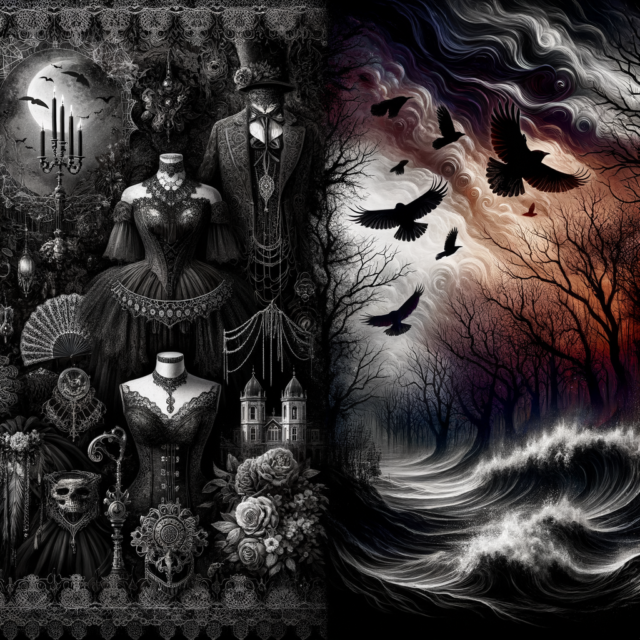
Dark culture is the aesthetic category. Goth, industrial, darkwave — it existed as a named genre well before techno absorbed the terminology. Dark culture describes what something looks like. The clothing, the lighting, the visual language. It is a category you can point at in a lineup photo and identify.
Dark taste is the underlying sensibility. It describes what you are drawn to and why. Dark taste existed before dark culture was named. It is the reason someone ends up in the basement instead of the main floor. The reason the minor key feels more honest than the major. The reason unease is more interesting than comfort.
Why the distinction matters
The distinction matters because it separates curatorial authority from trend-following. If dark culture becomes a trend — and it periodically does, as mainstream fashion absorbs industrial aesthetics and TikTok discovers darkwave — then dark taste is the thing that was there before it was cool and will be there after the trend cycle moves on.
We are not a dark culture party. We are the definition of dark taste. That is the positioning, and the difference is not semantic. The dark culture party books DJs who look the part and play tracks that fit the aesthetic checklist. The dark taste operation books based on whether the music induces the specific emotional response that the room exists to produce — catharsis through discomfort, beauty through tension, release through aggression.
For me, darkness is a filter, not a genre. Even if something sounds happy, it needs to be dark to be in my library. Poker Face included. The filter operates at the level of emotional resonance, not tempo or distortion or visual branding. A track can be dark at 110 BPM with clean production. A track can be surface-level dark at 150 BPM with a screaming vocal and still be hollow.
The taste architecture
Dark taste manifests differently depending on who carries it. For some people it is horror films. For others it is literature. For the people who end up at our events, it is sound — the specific sonic frequencies that translate internal weight into external experience.
The crowd that handles your worst and dances harder — that is the dream. When invited to play underground events, the imposter syndrome kicked in. The instinct was to play the most unhinged music, almost wanting to scare them away from the dancefloor. Every single time, they just danced harder. That moment is the entire thesis. The audience with dark taste does not flinch at intensity. They came specifically for it.
Music taste is not preference. It is character. The statement sounds extreme until you consider the alternative: that someone could share your life and not share your relationship with sound, and that this would not matter. It matters. The music you play in the car, the playlist you put on when you cook, the tracks that make you feel something at 4am — these are not decorations. They are diagnostics.
The trend-proof position
Dark culture will trend and untrend. It always has. The mainstream will absorb the look, strip the substance, sell it back as aesthetic product, and move on. The people who were only there for the culture will leave with the trend. The people who are there because of the taste will stay because the taste does not follow fashion. It precedes it.
Dark culture is what you wear. Dark taste is what you are. The party exists for the second group. The first group is welcome as long as they understand that the room is not curated for the look. It is curated for the feeling. If the feeling is not there, the look does not save it.