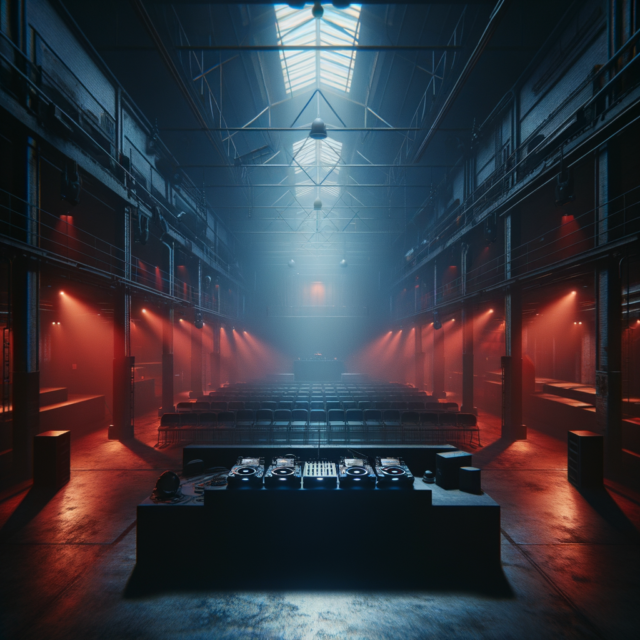
March 2024. TAT3 — Techno Afters Trap 3 — at Galospace NYC. I’d booked 10 out of 12 DJs personally. Signed a contract with the venue. Built the lineup over weeks. This was supposed to be a 14-hour arc with 13 DJ sets, off-duty cops for security, and an FDNY card holder on site. Everything by the book.
My co-promoter Chris had other plans. He went on a drug bender the day of the event and decided we should cancel. Mid-day. Hours before doors.
When I told him the event was still happening, he threatened to strangle me unless I went along with his plan to end the party early.
I made one phone call. To the venue owner, Olga. She confirmed what I already knew but needed on the record: the event belongs to Saimon. Chris doesn’t even have a contract with the venue.
That call separated the operator from the collaborator forever.
I gave Chris an hour to collect himself. Then I messaged every DJ on the lineup: party is on. All 13 sets ran as planned. The crowd had no idea anything happened behind the scenes. More support actually started flowing in because of the drama — people in the scene heard what went down and respected the composure under fire.
The lesson from TAT3 is simple and I’ve never forgotten it: whoever holds the DJ contracts and the venue relationship holds the event. Everything else is noise. A co-promoter can threaten whatever they want. If they don’t have the contracts, they don’t have the party.
Before TAT3, I was co-promoting. Splitting responsibilities. Trusting that shared ownership would work because more experienced organizers told me that’s how it’s done. After TAT3, I stopped co-promoting and started operating.
This was the founding moment where SLIST stopped being a collaboration and became mine. Not because I wanted full control — because the alternative was letting someone else’s drug bender cancel a party that 12 DJs and a full crowd were depending on.
The whole promoting thing got forced on me that night. When your collaborator threatens to cancel the event, you either take on the promoter role to save face, or you let everyone down. I chose the first option. I’ve been choosing it every day since.
I’m done with Chris, but the party is still going on. Better this way tbh.
That’s the line I sent to a friend that night. It became the operating philosophy. People come and go. The party continues. The contracts are in my name. The venue knows who runs the show. And if your business partner’s response to stress is a drug bender and a death threat, you didn’t lose a partner — you identified a liability before it got worse.
Every team decision I’ve made since TAT3 runs through the same filter: what happens when things go wrong? Because they will. Character doesn’t reveal itself in the planning phase. It reveals itself at 4pm on event day when everything is falling apart and the lineup is counting on you.