
In December 2023, SLIST threw an industrial techno event in SoHo. The conventional wisdom said this was a ridiculous idea. Hard techno belongs in Brooklyn. SoHo is for bottle service and fashion people. An industrial rave in a Manhattan neighborhood known for shopping and art galleries would be a guaranteed failure.
It sold out. Then the next one sold out. Then the next one. Ten events followed over six months, each one building on the last. Other promoters — larger ones, better funded ones — watched this happen and started booking their own hard techno events in Manhattan. SLIST had not just thrown a successful party. It had opened a market that nobody believed existed.
The pattern is consistent. Someone says a thing cannot be done. SLIST does the thing. The thing works. The people who said it could not be done either pretend they never said it or start doing it themselves. This has happened enough times that the skepticism itself has become a reliable signal. If the scene consensus says it will fail, it is probably worth trying.
Before the SoHo expansion, SLIST was rejected by Basement, the Brooklyn venue that had positioned itself as the gatekeeper of the underground. The rejection was personal. It landed during a period of accumulated grief and frustration. The response was not to try harder to get in. The response was to build something that made the approval irrelevant. Within months, SLIST was running events that drew bigger crowds than the venues that had rejected it. The rejection was not a setback. It was a directional signal.
The Mexico City chapter follows the same arc. Two people refused to put the founder on their guest list. The response was to build a guest list so large and so well-curated that it became the most valuable access point in the city. The people who withheld access created the motivation to build a system that made their access worthless. Spite as ignition, infrastructure as result.
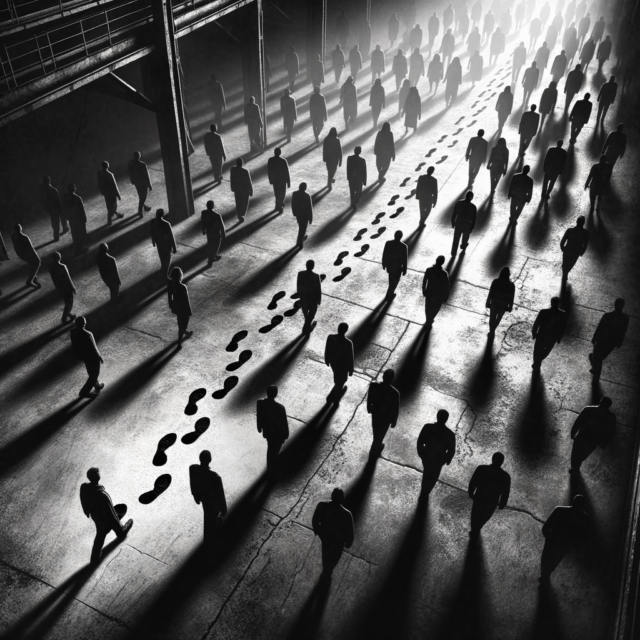
Going against the grain is not contrarianism for its own sake. It is a philosophical position rooted in a specific observation: the experts are often wrong. The facts that everyone takes for granted because an authority repeated them are frequently just conventions that nobody has bothered to test. The rave scene is particularly susceptible to this because it runs on social consensus. If enough promoters agree that something will not work, nobody tries it, and the consensus becomes self-fulfilling prophecy.
SLIST breaks that cycle by testing the assumptions directly. Industrial techno in SoHo — tested and proven. Dark music events on Thursdays as loss-leaders for community building — tested and working. DJs pushed to play their most experimental sets instead of safe crowd-pleasers — tested across hundreds of bookings, and the crowd dances harder every time. Genre expansion from core industrial techno into drum and bass, psy trance, and bass techno — tested with audiences that keep growing.
The creative risk tolerance extends beyond music. The brand identity itself was an experiment that every advisor would have counseled against. The name carries controversy. The content is deliberately provocative. The marketing strategy relies on shitposting instead of paid ads. Every element of the brand violates some best practice that a consulting firm would have flagged as high-risk. And every element works precisely because it violates those practices. The risk is the differentiator.
There is a formative moment that crystallized this approach. Discovering psy trance at 6am in a tiny Mexico City venue with twenty people. The most transformative musical experience did not happen at a festival with a million-dollar production budget. It happened in a raw, small setting where the only thing that mattered was the sound. That moment is why SLIST events privilege intensity over production value, why the brand chases depth instead of scale, and why the conventional wisdom about what a successful event looks like gets ignored routinely.
Stagnation is death. There is no development without experimentation. These are not slogans. They are operational principles that have been validated across two countries, dozens of events, and every category of failure that the scene predicted for SLIST. The predictions were wrong because the predictors were working from assumptions they had never tested.
We believe in the power and appeal of dark culture and dark music. We believe there is something in it for everyone. And we will put ourselves on the line — reputationally, financially, personally — to expose more people to it, even when people tell us it is a bad move, a trend, or just too edgy. Especially then. Because every time someone says that, the data says otherwise. And the data is the only opinion that pays rent.