
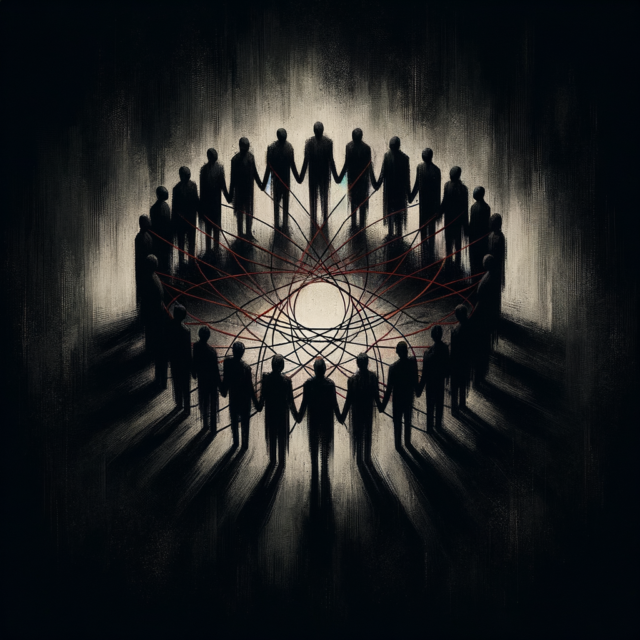
Cancellation creates instant trust between survivors. The people who have been through it bond faster and trust each other more deeply than anyone else in the scene. Shared experience of being targeted, isolated, and surviving creates a loyalty that no networking event or collaboration pitch can replicate.
The alliance of the cancelled is not a support group. It is a power network formed by people who have nothing left to lose reputationally and everything to gain from working together.
How it forms
The pattern is consistent. Someone gets cancelled. The mainstream scene distances itself. The cancelled person looks around for allies and finds other cancelled people who have already been through the cycle. The bond is immediate because the shared experience eliminates the trust-building phase that normal relationships require.
Alexandra posted memes that got her deleted from Instagram. The cancel machine came for her the same way it comes for everyone — decontextualized screenshots, group chat campaigns, pressure on collaborators to distance themselves. When we connected, the war stories traded instantly. No preamble needed. The shorthand already existed because the experience is the same regardless of the specific accusation.
The cancelled recognize each other. There is a specific look in someone’s face when they have been through a public campaign and survived. Not defeated. Not bitter. Something harder to name — a clarity about who matters and who does not that only comes from watching half your network disappear overnight and seeing who remained.
The network effect
The alliance has structural advantages over the mainstream network it was excluded from. First, everyone in it has already been tested. The worst thing that can happen to their reputation has already happened. There is no reputational risk in association because the reputation has already been challenged and survived.
Second, the cancelled tend to be the most interesting people in any scene. The people who get cancelled are almost always the people who said something that the consensus was not ready for. Not always right. Not always tactful. But interesting. The boring people do not get cancelled because they never say anything worth targeting.
Third, the alliance operates outside the consensus enforcement mechanism. The mainstream scene runs on social approval. The cancelled scene runs on mutual respect. The difference is that social approval can be withdrawn. Mutual respect, earned through shared survival, tends to be permanent.
The counter-intuitive advantage
The social cost of association is real. Following the cancelled person’s account, playing their event, or publicly supporting them carries risk in scenes where social approval is currency. But the people willing to pay that cost are the ones worth having. They have demonstrated that they evaluate situations independently rather than following the crowd. That quality — independent judgment under social pressure — is exactly what you want in a community member, a collaborator, or a friend.
The alliance of the cancelled is not a club anyone wants to join. It is a network that forms around people who refused to apologize for being themselves. The price of admission is a public campaign against your character. The benefit is a network of people who understand that the campaign says more about the campaigners than the target. The cancelled did not choose each other. The scene chose them out, and they found each other in the margin.