
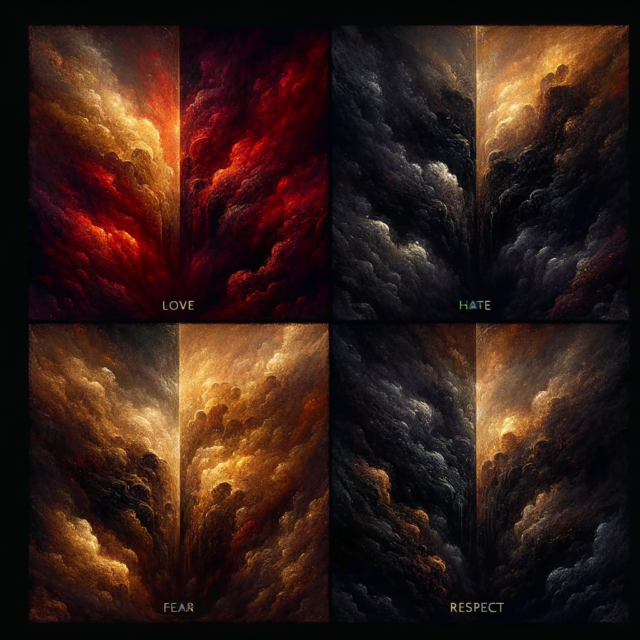
The four axes of personal brand positioning are not a matrix from a business school textbook. They are the four emotional responses a name can produce in a room. Every operator, every promoter, every public figure lands somewhere on each axis. Most people aim for loved and respected while avoiding hated and feared. The interesting position is holding all four simultaneously.
Loved
The community that defends the project before any commercial element exists. The DJs who play for cost because they believe in the curation. The ravers who drive 90 minutes because nowhere else sounds like this. The mentees who received free advice and stayed in the ecosystem. Love in the scene is not affection. It is loyalty earned through consistent delivery of something that cannot be found elsewhere.
The community is the headliner. More energy goes into curating the dancefloor than the bookings. The focus is almost entirely on building up local DJs before thinking about headliners. The people who stayed through the drama, the financial struggles, the cancel wars — they stayed because the project gave them something real. That is love in the only form that matters operationally: retention.
Hated
The most toxic rave brand in NYC after maybe one or two others. That reputation is not accidental. It was engineered. Started a group chat asking how to make it the most toxic chat just to cause buzz. The toxicity is positioned as honesty in opposition to performative progressivism.
The hatred serves a filtration function. The people who hate the project are precisely the people whose absence improves the room. Driving away overtly sensitive people is not the worst consequence. They are usually the ones to stir up the most trouble. The hatred is not a side effect of the brand. It is a feature of the curation.
Feared
No one wants to risk trying to cancel anymore after a few haters got exposed. The deterrent is active. The doxxing playbook, the counter-intelligence gathering, the screenshot archive — these are known quantities in the scene. The fear is not of violence. It is of exposure. The person who attacks the project knows that the response will be disproportionate, documented, and public.
Every day you see the logo, you are going to remember. Brand dominance as psychological presence. The CDMX account grew from 1,000 to 4,800 while the founder was in NYC. The machine keeps running even without physical presence. That persistence is what produces fear — the understanding that the operation cannot be waited out.
Respected
DJs get paid standard fees. Never reneged on a deal with artists or venues. The curation always comes first — that is the first principle before any other social factor. Transparent about being in the red from bad events. These are the building blocks of respect in the underground: pay your people, keep your word, admit when you lose money, and never compromise the sound for the sake of the business.
The arrest converted from liability to credibility. OG bookers who previously ignored the project started reaching out after the arrest. The operator mindset reframes every setback as leverage. The respect comes not from never failing but from the visible evidence of surviving failure and continuing to build.
Loved by the community. Hated by the gatekeepers. Feared by the enemies. Respected by the operators. The four are not contradictions. They are the four walls of the same room. The room holds 700 people. It is full every time.