
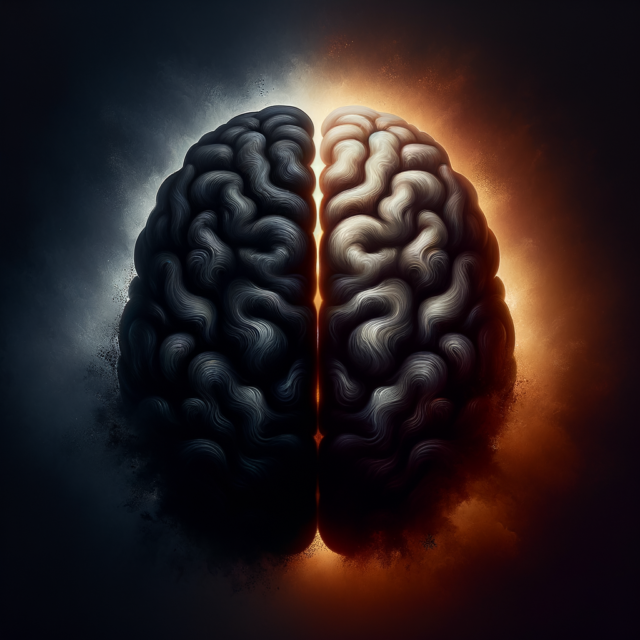
I need therapy. I have only been listening to dark stuff for a while. But I am worried therapy will take away all my creative energy and angst. That fear is real, documented, and unresolved.
The darkness is explicitly understood as fuel. Not just aesthetic preference but a functional emotional engine. The unsettling sounds, the minor keys, the aggressive transitions, the sets that move from sadness to anger to release — all of it runs on the same tank. The worry is that draining the tank through therapeutic processing will also drain the creative output that depends on it.
The trade-off
Every artist who works from pain faces the same question eventually. If the pain is the source, and the work is the expression, then reducing the pain reduces the expression. The math is simple and terrifying. Get healthier, lose the edge. Keep the edge, stay unwell.
The counter-argument is that processed pain produces better work than raw pain. That the artist who has done the therapeutic work has more control over the emotional material, not less. That insight deepens the art instead of diluting it. This argument is probably correct. It does not feel correct at 4am when the only thing producing honest music is the thing you are afraid to examine too closely.
With enough meditation you can just choose to let go of worldly suffering and become more numb to it all. Some people do it with fentanyl and opioids. In a rave world saturated with substances, meditation as the preferred tool for emotional management. The juxtaposition is intentional. The same impulse that drives someone toward ketamine at 3am drives someone else toward breathwork at 7am. Different delivery mechanism. Same underlying need.
The creative engine
The creative process is wired directly into the emotional circuitry. The set that goes from sad hard techno to angry techno is not a genre exercise. It is emotional autobiography performed in real time. The catharsis the crowd experiences is borrowed from the catharsis the DJ is processing behind the decks. If the DJ is no longer processing anything, the set becomes technically proficient and emotionally vacant.
The fear is specific: that therapy will solve the problem that the music was built to address. If the music is processing grief, and therapy processes the grief more efficiently, then the music loses its function. The rave stops being a container for darkness and becomes a container for entertainment. The difference between those two things is the difference between the project that matters and the project that is just another event series.
The unresolved position
This is not an argument against therapy. It is a documentation of the fear that prevents it. The fear might be wrong. It might be the last defense mechanism of a psyche that has built its entire identity around the wound and is terrified of what exists on the other side of healing.
The dark music project exists partly as therapy’s substitute — processing through creation instead of conversation, through performance instead of confession. Whether that substitute is sufficient or merely delaying the inevitable is a question that remains open.
The worry stands. Therapy might take the edge. The edge might be the only honest thing left. Until that trade-off resolves itself — if it ever does — the music stays dark, the sets stay heavy, and the creative engine runs on the fuel it has always run on. Unprocessed, unresolved, unmedicated. For now.