
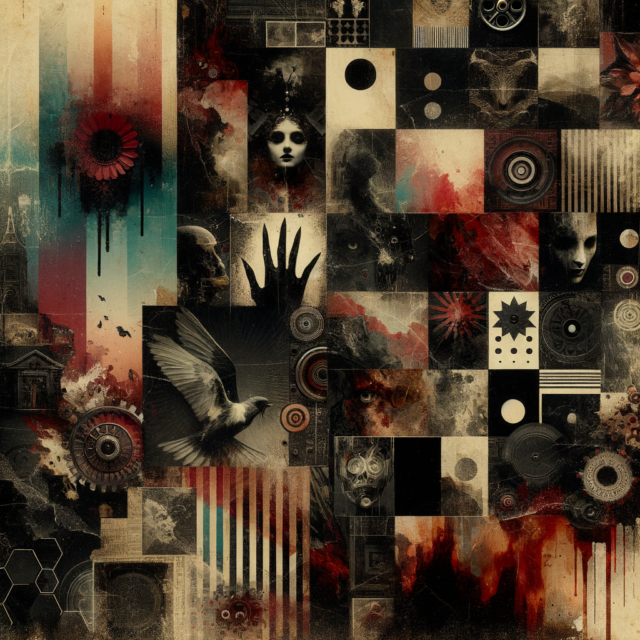
Cultures express shared attitudes, values, and practices. Dark culture is a subculture that explores the human condition, prompts introspection, investigates mysteries, promotes rebellion, and embraces the macabre and surreal. Dark art is often viewed as anti-conformist and underground, but it doesn’t have to be obscure. It’s less about shock and more about depth. If something makes you confront mortality — or question what it means to be human — it’s likely dark.
SLIST exists at the intersection of dark music and live experience. But the sensibility that drives our curation didn’t originate on a dance floor. It came from film, literature, manga, fashion, and every other medium where artists chose to look directly at what most people avoid.
The distinction that matters
Dark culture and dark taste are not the same thing. Dark culture is the aesthetic category — goth, industrial, darkwave — named genres that existed well before techno absorbed the terminology. Dark taste is the underlying sensibility. The thing you’re drawn to and why. Dark culture describes what something looks like. Dark taste describes what pulls you in.
SLIST’s position is clear: we are not “a dark culture party.” We are the definition of dark taste. This distinction matters because it separates curatorial authority from trend-following. If dark culture becomes a trend (and it has), dark taste is the thing that was there before it was cool and will be there after the wave recedes.
Film
The filmmakers who matter to this sensibility are the ones who treated darkness as a lens, not a gimmick. David Lynch built entire worlds out of suburban dread. Kubrick weaponized symmetry to make the familiar feel alien. Gaspar Noe made time itself feel violent. Tarkovsky turned spiritual searching into something you could feel in your chest. These aren’t horror directors (though some made horror). They’re artists who understood that the most honest way to depict human experience is to include the parts most people look away from.
Literature
Dark literature doesn’t mean gothic romance or cheap horror paperbacks. It means Dostoevsky dragging you through the psychology of murder and making you understand it. Kafka turning bureaucracy into a nightmare indistinguishable from real life. Cormac McCarthy writing landscapes so bleak they function as characters. Murakami building quiet dread out of missing cats and empty wells. The common thread: these writers force confrontation with truths that polite society pretends don’t exist.
Manga and anime
Berserk. Junji Ito. Evangelion. Serial Experiments Lain. Japanese dark art operates on a frequency that Western culture often misses — the willingness to sit with suffering without resolving it. Kentaro Miura spent 30 years drawing a world where hope exists but costs everything. Junji Ito made cosmic horror feel domestic. Evangelion took the mecha genre and turned it into a therapy session about abandonment. This is dark taste at its purest: no redemption arc required.
Fashion
Rick Owens built a fashion empire on brutalism and draped silhouettes that look like they belong in a post-apocalyptic cathedral. Rei Kawakubo at Comme des Garcons deconstructed the human form until beauty and discomfort became indistinguishable. Alexander McQueen staged runway shows that felt like funerals and art installations simultaneously. Dark fashion isn’t about wearing black. It’s about clothing as confrontation — forcing the viewer to reckon with the body, with decay, with the tension between beauty and destruction.
Music
This is the medium SLIST lives in, and the one we’re most opinionated about. Dark music isn’t a genre — it’s a filter. Even if a track sounds happy, it needs to be dark to earn a place in the library. Sadness into anger into release. That emotional arc is deliberate. It’s not aesthetic — it’s psychological function.
The formative experience: discovering psy trance at 6am in a tiny CDMX venue with 20 people. Mind blown. The most transformative musical experiences happen in small, raw settings — not spectacles. That’s why SLIST events privilege intensity over production value. 75% of the US does not enjoy listening to dark music. There is statistically no point in trying to win over everyone. We’d rather own the niche than chase the mainstream.
Why it has to be everything
A rave collective that only understands music is a booking agency. SLIST is a cultural project. The dark sensibility that drives our DJ selections is the same one that informs how we think about visual art, storytelling, fashion, and community. You can’t curate a dance floor authentically if your taste stops at BPM ranges and sub-bass frequencies.
Dark culture across all mediums isn’t a marketing position. It’s the only honest way to describe what this project actually is: a community built on the belief that the most meaningful art comes from the places most people are afraid to look.